

Filters

...because your future home should make sense on paper before it comes to life in bricks and mortar.
When you’re buying off-the-plan, the floorplan isn’t just a blueprint - it’s a glimpse into your future lifestyle.
But if you’ve ever looked at a plan and thought "wait… where’s the fridge?" or "is that wall full height?", you’re not alone.
Floorplans can feel clinical or confusing at first glance - but once you know what to look for, they become an incredibly helpful tool for visualising your space, making comparisons, and asking the right questions.
This guide will help you read between the lines - literally - so you can move from confusion to confidence.
Start with orientation: which way is north?
Every floorplan should include a north point - and it’s not just a technical detail. Orientation affects how your home will feel throughout the day.
- North-facing living areas usually get the most consistent natural light (especially in winter)
- West-facing bedrooms might get warm in the afternoon
- South-facing apartments may feel cooler or shaded
Understanding the light movement across your space can help you imagine how it will feel to live in it - from where your morning coffee spot will be, to whether you’ll need blinds in the evening.
AD Tip: Think about how the orientation fits with your lifestyle. Do you love morning light? Prefer a darker bedroom? Let that guide your preferences.

Size matters - but it’s not just about square metres
A floorplan will list the internal area, and sometimes the balcony or courtyard separately. But don’t just compare total square metre numbers - how the space is used is far more important.
Look at:
- Room proportions: A generous open-plan area matters more than oversized hallways
- Flow and layout: Is the kitchen central to the home? Are bedrooms tucked away for privacy?
- Dead space: Long, narrow corridors may take up valuable living area without adding much function
AD Tip: Use the dimensions on the plan to map out the room at home with tape or furniture. It’ll help you visualise scale in a real-world setting.
Doors, windows and circulation
Tiny symbols can reveal big insights:
- Solid lines in openings often indicate swinging doors (note which way they open)
- Sliding doors are shown with an arrow or overlapping lines
- Windows are usually thinner lines or gaps in the wall
Ask yourself:
- Can doors open without blocking furniture?
- Is there enough clearance to move comfortably through the home?
- Will windows bring in natural light where it matters most - like living areas, bedrooms and bathrooms?

Think like you’re living in it
When reading a floorplan, step into the space in your mind. Walk through it as though it’s already built.
- Where would you hang your coat or drop your keys?
- How would you set up your couch and TV?
- Where’s the dining table going?
- Do bedrooms allow for bedside tables and have enough robe space for all of your clothes?
Look for storage, laundry spaces, and flexible zones - like a study nook or multi-use area. These aren’t always the headline features, but they make a big difference in daily life.
Walls, ceilings and structure
Pay attention to the thickness of the walls on the floorplan:
- Thicker lines usually indicate structural or external walls
- Thin lines often represent internal partitions
Also, ask about:
- Ceiling heights (not always shown on plan)
- Bulkheads or dropped ceilings (especially in kitchens or hallways)
- Column/beam placements - sometimes marked with dots or circles
These details affect how spacious and open a room will feel, even if the dimensions are generous.
Bathroom and kitchen layouts
These areas are where flow, access and storage really count.
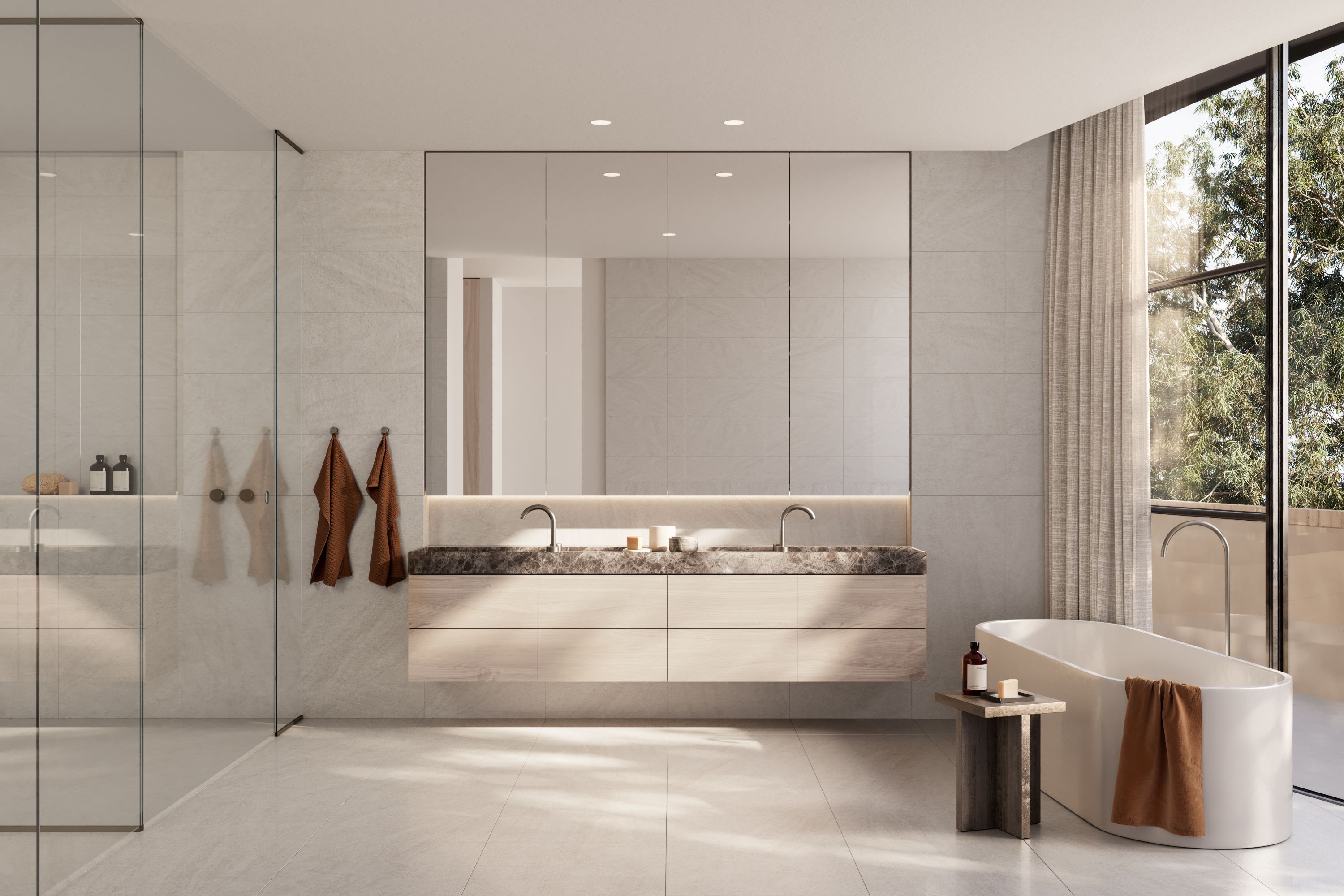
In bathrooms, check for:
- Walk-in showers vs. shower-over-bath
- Bench space and mirror positioning
- Room to comfortably move around
In kitchens, look at:
- The work triangle (fridge, sink, cooktop) - will the layout work for you?
- Pantry or cupboard space
- Whether appliances are included (sometimes marked on the plan)
AD Tip: If appliances are shown, check whether they’re full-size or compact. It gives a clue about scale.
Ask for the full picture
A single floorplan doesn’t tell the whole story. Ask the agent for:
- Inclusions list: What finishes, fixtures and appliances are included?
- Ceiling heights and section diagrams: Especially in apartments
- Lighting plans: Not always shown but can make or break ambience
- Furniture layouts: Some plans include suggested furnishing - helpful for scale
And don’t be afraid to ask for clarification - your sales agent can read floorplans with their eyes closed and will be happy to walk you through it.
Final thought
Reading a floorplan doesn’t require a design degree - just a little practice and the right questions. By learning how to interpret layout, scale, flow and orientation, you’ll feel far more confident comparing your options and picturing yourself in the space.
After all, you’re not just buying square metres - you’re buying how it feels to live there.
For more off-the-plan buying guides, click here.
Share this article
Sign up for new article alerts
Receive every new listing in your inbox